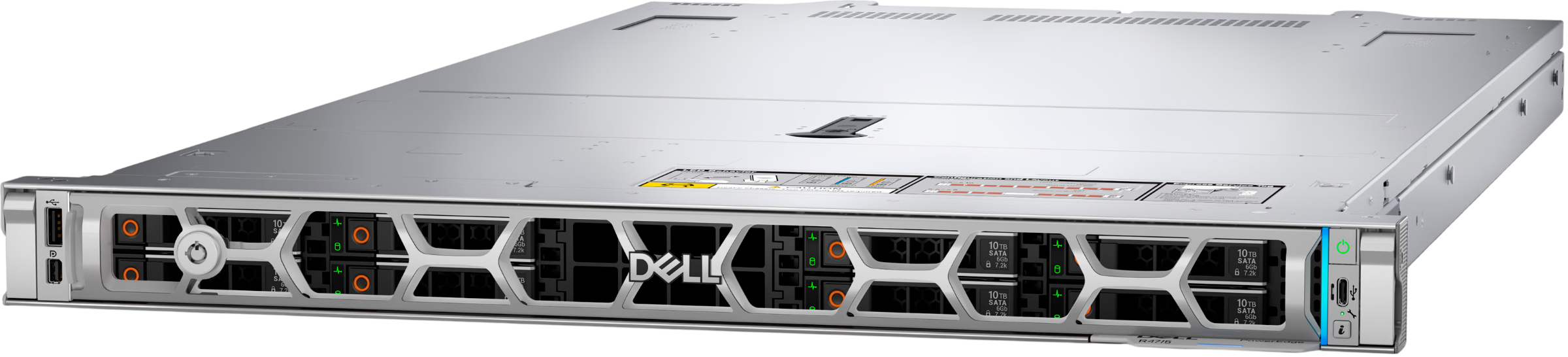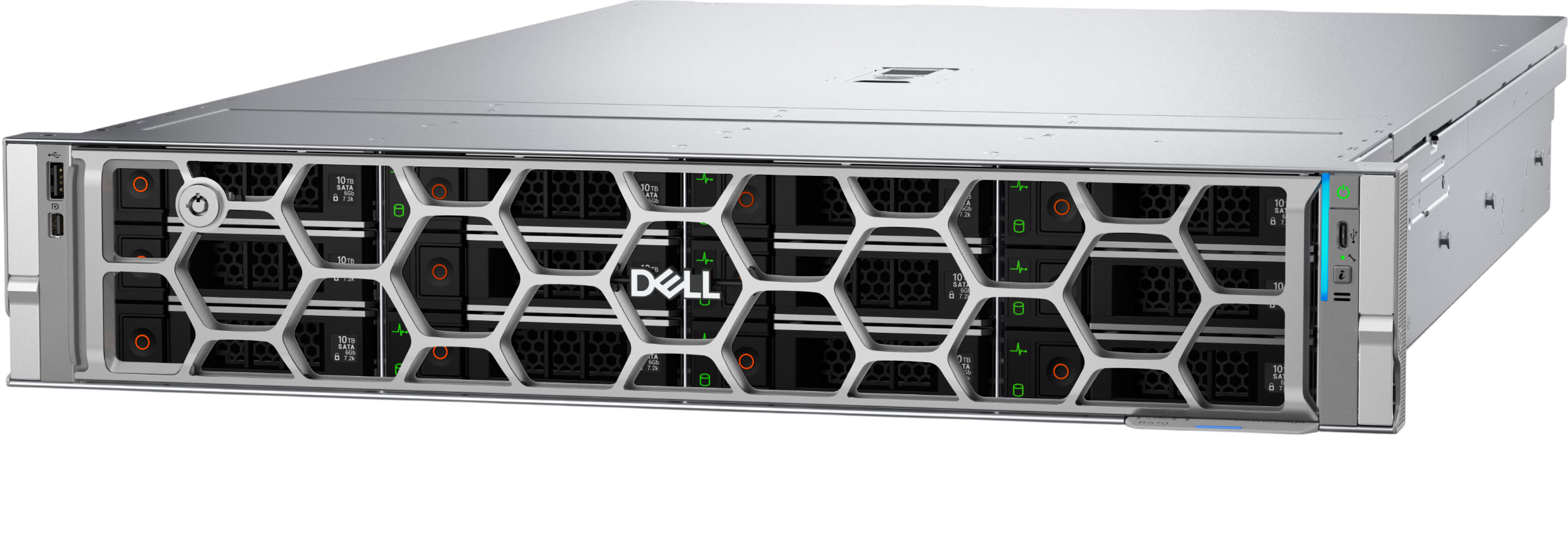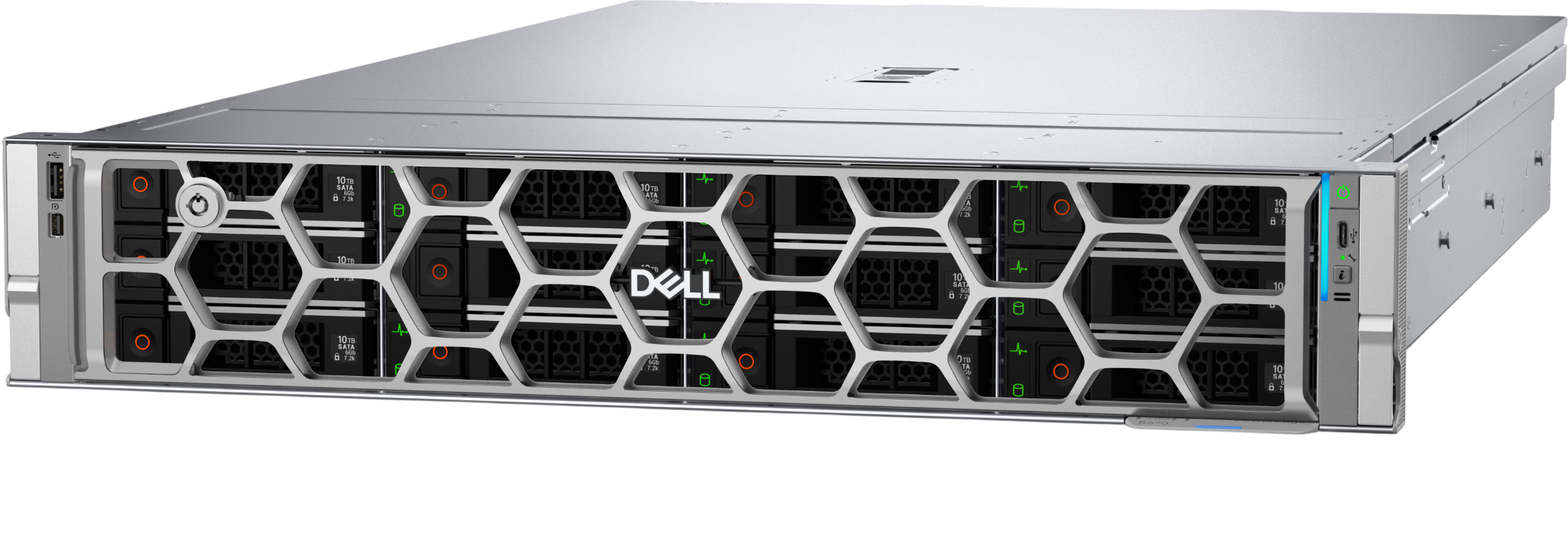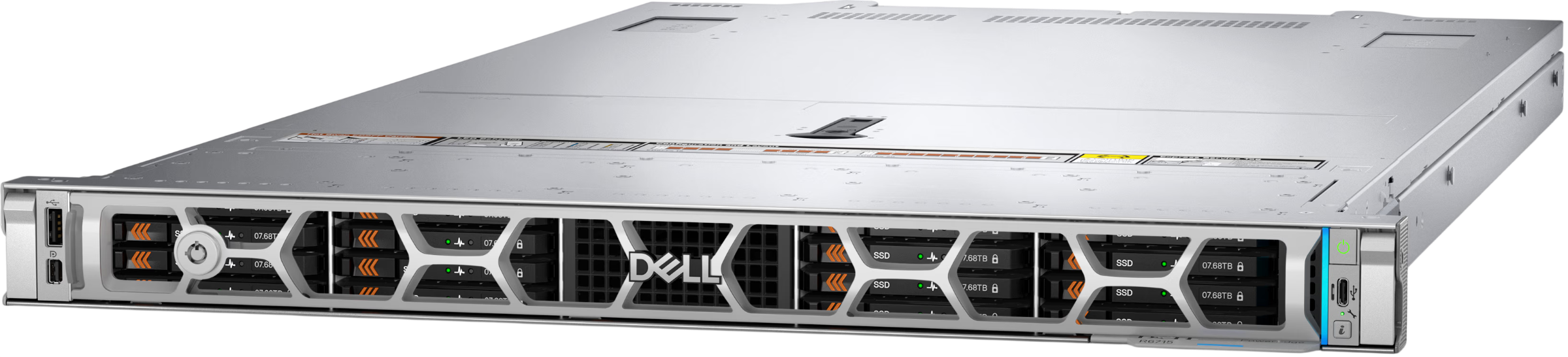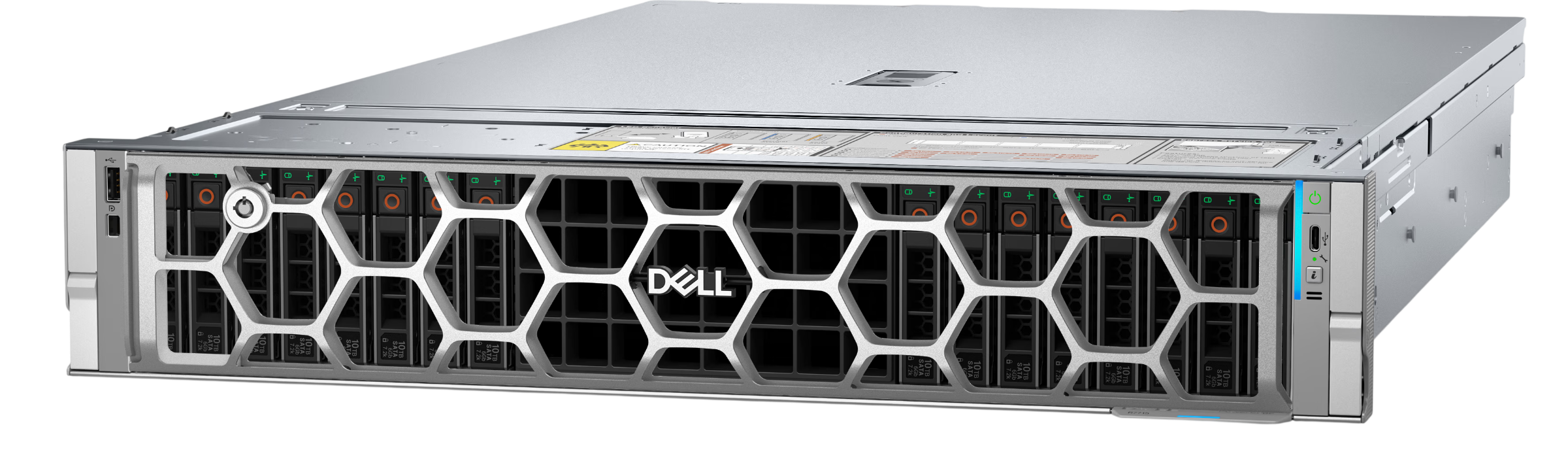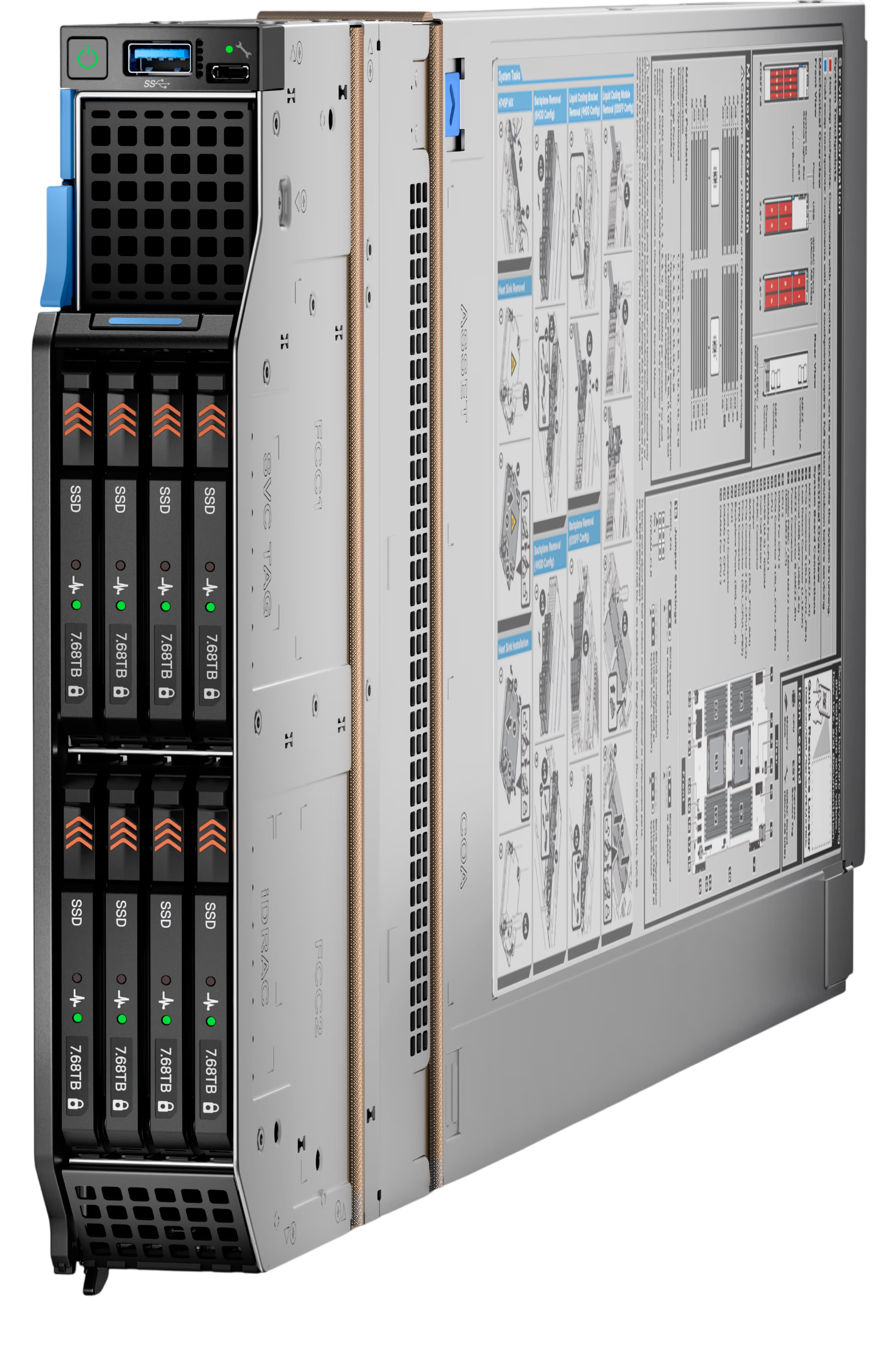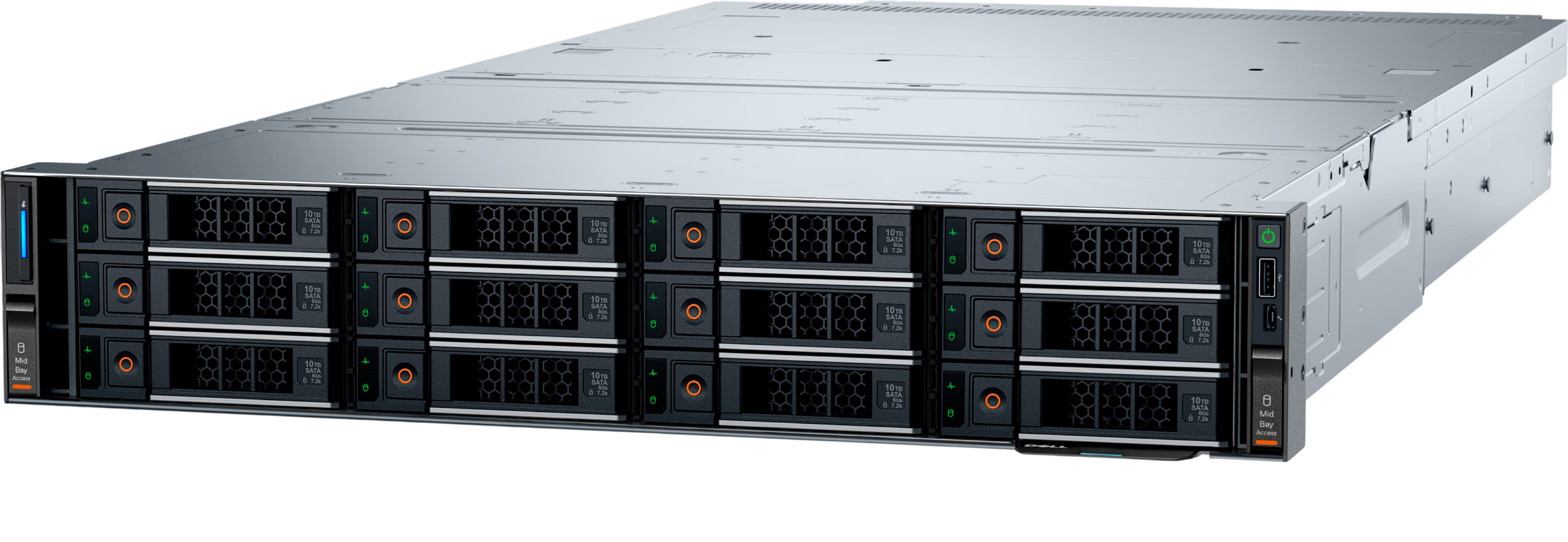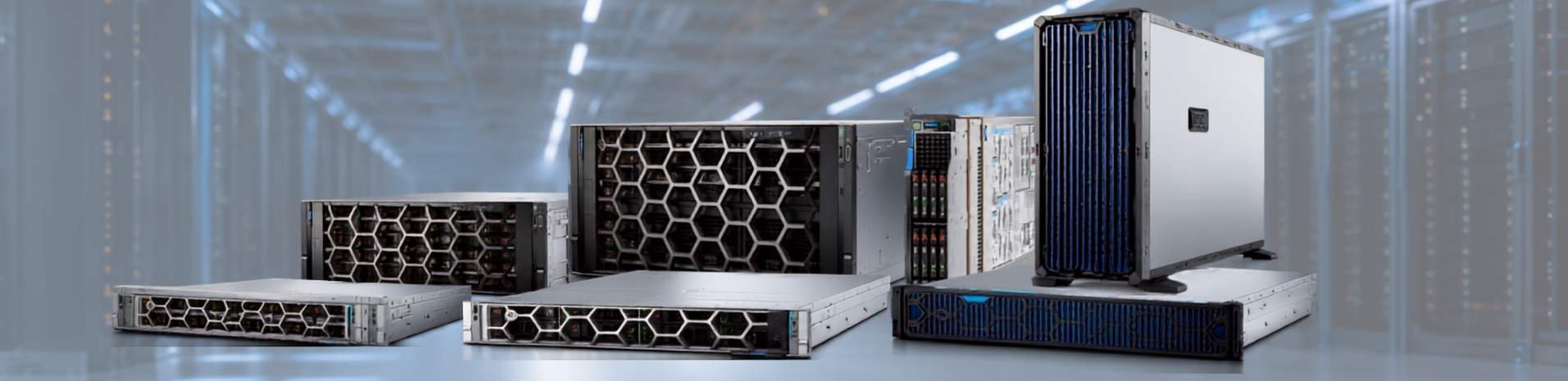
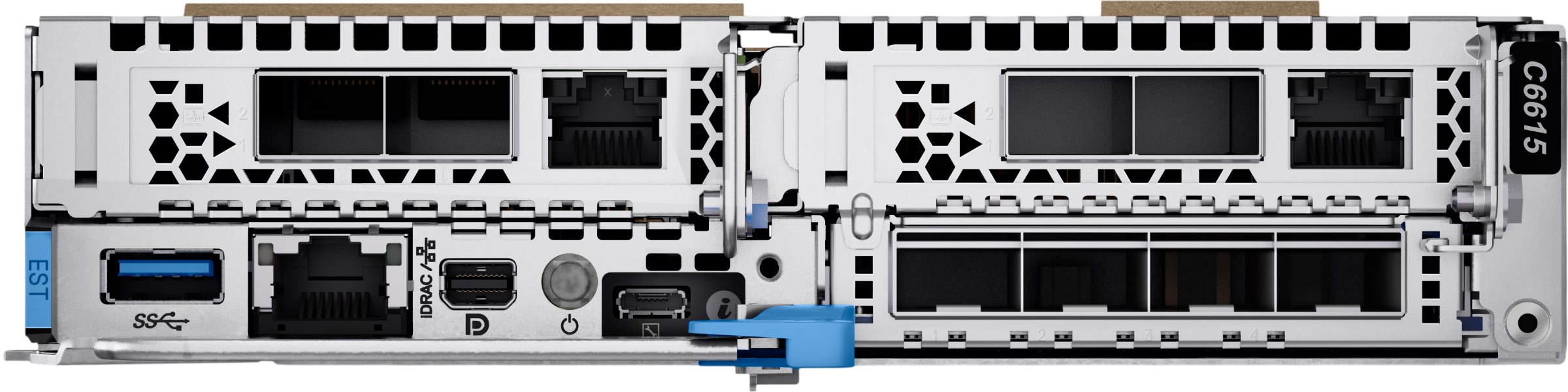
PowerEdge C6615 - 1 Socket - Scale your business, not your footprint
(DELL)
Workloads : High-Density & Scalable Computing, Digital Services, XaaS Providers, Web Technology Applications
Form Factor : 2U Rack Server
Processor : 1 × AMD EPYC™ 8004 Processor
Maximum Memory : 6 × 96 GB DDR5 (Up to 576 GB)
Maximum Storage : Up to 61 TB
GPU : N/A
Processor
• One AMD EPYC™ Processor (Up to 64 Cores)
Cooling
• Air Cooling
Operating System
• Canonical Ubuntu Server LTS
• Microsoft Windows Server with Hyper-V
• Red Hat Enterprise Linux
• SUSE Linux Enterprise Server
• VMware ESXi / vSAN
Chipset
• AMD Chipset
Memory
• DIMM Speed: Up to 4800 MT/s
• Memory Type: RDIMM
• 6 × DDR5 DIMM Slots
• Maximum Memory: Up to 384 GB RDIMM (6 × 64 GB)
Storage
Front Bays
• Up to 16 × 2.5" SAS/SATA HDD/SSD Drives (Up to 61 TB)
• Up to 16 × 2.5" SATA/NVMe Drives (Universal Backplane)
Storage Controllers
• Internal Controllers: PERC H755N, H355
• Internal HBA: HBA355i (12Gbps SAS, Non-RAID)
• Software RAID: S160
• Internal Boot: Boot Optimized Storage Subsystem (BOSS-N1) with HW RAID 1 (2 × M.2 SSD 480GB / 960GB)
Security
• AMD Secure Encrypted Virtualization (SEV)
• AMD Secure Memory Encryption (SME)
• Cryptographically Signed Firmware
• Data at Rest Encryption (SED)
• Secure Boot
• Secured Component Verification
• Secure Erase
• Silicon Root of Trust
• System Lockdown
• TPM 2.0 (FIPS, CC-TCG Certified)
Management
• iDRAC9
• iDRAC Direct
• iDRAC RESTful API with Redfish
• iDRAC Service Module
OpenManage Consoles
• CloudIQ for PowerEdge
• OpenManage Enterprise
• OpenManage Enterprise Integration for VMware vCenter
• OpenManage Integration for Microsoft System Center
• OpenManage Integration with Windows Admin Center
• OpenManage Power Manager
• OpenManage Service
• OpenManage Update Manager
Mobility
• OpenManage Mobile
Tools
• Dell Repository Manager
• Dell System Update
• Enterprise Catalogs
• IPMI
• RACADM CLI
• iDRAC RESTful API with Redfish
OpenManage Integrations
• BMC TrueSight
• Microsoft System Center
• OpenManage Integration with ServiceNow
• Red Hat Ansible Modules
• Terraform Providers
• VMware vCenter & vRealize Operations Manager
Power Supplies
• 3200W 277VAC / 336VDC Redundant (Hot-Swap)
• 2800W Titanium 200–240VAC / 240VDC Redundant (Hot-Swap)
• 2400W Platinum 100–240VAC / 240VDC Redundant (Hot-Swap)
• 1800W Titanium 200–240VAC / 240VDC Redundant (Hot-Swap)
• Up to 4 Cold-Swap Fans
Ports
Network
• 1 × OCP 3.0 Gen5
• 1 × 1GbE LOM
Rear
• 1 × USB 3.0
• 1 × Dedicated iDRAC Ethernet Port
• 1 × iDRAC Direct (Micro-AB USB)
• 1 × Mini DisplayPort
Internal
• 1 × USB 3.0 (Optional)
Expansion Slots
• Up to 2 × PCIe Gen5 x16 Slots
Form Factor
• Up to 4 Independent Hot-Swappable Single-Socket C6615 Sleds in a 2U PowerEdge C6600 Chassis
Dimensions & Weight
• Height: 40.0 mm (1.57")
• Width: 174.4 mm (6.86")
• Depth: 549.7 mm (21.64") / 561.3 mm (22.10") (SAS/SATA, NVMe, E3.S & Universal Configurations)
• Weight: 3.7 kg (8.15 lbs.)
Innovate where you never thought possible
Maximize ROI with more dense compute
• Powered by AMD EPYC™ Processor with up to 64 cores for high-performance computing.
• Single-socket architecture delivers excellent compute density while reducing infrastructure costs.
• Supports DDR5 memory up to 4800 MT/s for faster application performance and improved responsiveness.
• PCIe Gen5 technology provides up to twice the bandwidth of PCIe Gen4 for faster data transfer and storage access.
• Optimized airflow and air-cooled design improve thermal efficiency while reducing power consumption.
• Ideal for scale-out WebTech, cloud infrastructure, virtualization, and high-density enterprise workloads.
Systems management and security solutions
OpenManage systems management
• Simplify IT operations with Dell OpenManage tools to discover, deploy, monitor, manage, update, and secure your PowerEdge infrastructure.
Intelligent automation
• Automate server lifecycle management using iDRAC, OpenManage Enterprise, and CloudIQ to improve operational efficiency and simplify IT administration.
Built-in security
• Protect your infrastructure with Dell's cyber-resilient architecture featuring Silicon Root of Trust, Secure Boot, signed firmware, component verification, BIOS recovery, and dynamic system lockdown for comprehensive end-to-end security.