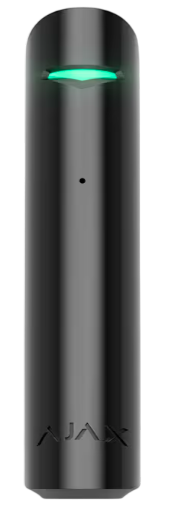
GLASS PROTECT ( WHITE )
(AJAX)
Forget about the typical problem of glass break detectors — false alarms caused by barking dogs, traffic, water splashing, and extraneous noise. GlassProtect Jeweller has a unique DualTone digital algorithm designed to minimize false alarms. The detectorʼs microphone responds only to vibrations characteristic of the glass breaking sound. You can adjust one of three sensitivity levels and run the test to check if everything works properly.
Wireless glass break detector for alarm system GlassProtect Jeweller
The security system protects the territory from fires, leaks and intrusions. Appropriate detectors for each type of threat help prevent property damage and secure the premises. The glass breakage sensor is one such device.
Glass breakage sensors are used indoors and signal burglary after the corresponding sound is recorded. Glass break detectors are installed in private premises, shops, offices, etc.
Before installing a glass break detector, users should familiarise themselves with the types and features of the devices.
Classification of glass break sensors
According to the principle of work:
Distinctive characteristics of acoustic glass break sensors:
Acoustic glass break sensors are the most common in alarm systems. Devices of this type have high protection and the absence of false alarms for extraneous sounds.
Features of acoustic glass break sensors
Device activation algorithm:
The analysis of acoustic waves passes through the low-frequency and high-frequency amplitude. As a result of hitting the glass, low frequencies appear, and high frequencies are the sound of a broken sheet of glass.
When choosing a sound-type glass break sensor, users must pay attention to the monitored glass sheet type, size, and thickness. Most models are universal devices, in memory of which there is information about the most common types of glass in construction. The acoustic sensor can work with 2.5-8 mm glasses.
Please note that reinforced or laminated glass requires separate settings or specific sensor models.
Glass break sensors should be mounted on walls or other load-bearing structures not subject to vibration at a height of up to 2 m. Such an arrangement of the device will prevent obstruction of the signal of the glass break detector by third-party objects and its unauthorised dismantling. When installing the device, users need to consider the presence of protective films, curtains, blinds and other elements on the glass. They can distort or make the breaking sound weak.
An essential function of the glass break sensor is anti-masking, preventing sensitive sensors from being blocked.
Wireless glass break detector Ajax GlassProtect Jeweller for indoor installation
Glassbreak detector GlassProtect Jeweller is a wireless device that detects broken glass in a protected area. The wireless sensor detects and captures low, and high-frequency glass-breaking sounds with a sensitive microphone. After catching the incident, the sensor sends an alarm signal to the alarm control panel via the Jeweller secure radio channel. After a multi-stage signal analysis, the wireless detector reacts to the sound of broken glass, ignoring other loud sounds.
A wireless glass break sensor is installed on the SmartBracket mount in a few minutes without disassembling the case. The GlassProtect Jeweller wireless glass break detector transmits a signal via two-way radio communication, protecting the device from forgery and encrypting the transmitted information. This principle of signalling provides security alarm protection against hacking attempts. Communication is maintained at a distance of up to 2000 m to the hub control panel if no obstacles exist.
The security glass break detector is compatible with wired control panels thanks to connecting the ocBridge Plus radio receiver.
Wireless glass break detectors recognize the pathogen at a distance of up to 9 metres. If someone tries to break the window to enter the premises, the alarm system will immediately notify users and the security company about the incident.
Installation of a glass break detector
The wireless device is ready to work out of the box. The battery is pre-installed. The Ajax mobile application makes a connection and all settings of the wireless sensor. The glass break detector is mounted on the SmartBracket mount without disassembling the case.
The wireless glass break detector has a tamper button that warns system users about an attempt to open or remove the device from the mounting panel.